
This post may contain affiliate links. When you purchase through links on my site, I may earn a commission at no cost to you. See my Privacy Policy for details.
Nothing says summer like cutting open a watermelon you grew yourself. The trick to learning how to grow watermelon is simple. It does not like shortcuts.
If your plants stall, stay leafy with no fruit, or split right before harvest, the problem usually comes back to heat, water, or pollination. Get those three right, and this crop gets a lot less mysterious.
Let’s start with the growing conditions that make watermelon happy from day one.
Pick the Right Spot Before You Plant
Watermelon is a heat-loving plant. It wants long, warm days, mild nights, and soil that has already warmed up. If spring still feels cool, wait to grow watermelon.
You need full sun, not “mostly sunny.” Give plants at least 8 hours of direct light, and more is even better. For a second opinion on site choice, UMN Extension’s melon guide also recommends hot, sunny spots with fertile, well-drained soil.
This quick table keeps the basics easy to remember:
| Need | Best range |
|---|---|
| Daytime temperature | 70 to 90 F |
| Soil temperature at planting | 70 F or warmer |
| Sunlight | 8 or more hours |
| Soil pH | 6.0 to 6.8 |
| Spacing for vining types | 3 to 5 feet apart |
Loose, rich soil matters just as much as sun. Work in compost before planting, and don’t tuck watermelons into a wet, heavy spot that stays soggy after rain. Roots rot fast in poor drainage.
Give the vines room. Standard varieties sprawl all over the place. Most need 3 to 5 feet between plants and 6 to 8 feet between rows. Bush or compact types can sit closer, often 2 to 3 feet apart, but always check the seed packet.
If you’re mapping out a bigger food garden, this is a good time to look at a guide to planning a kitchen garden. Watermelon can take over a bed fast, so space planning saves headaches later.
Plant Watermelon in Warm Soil
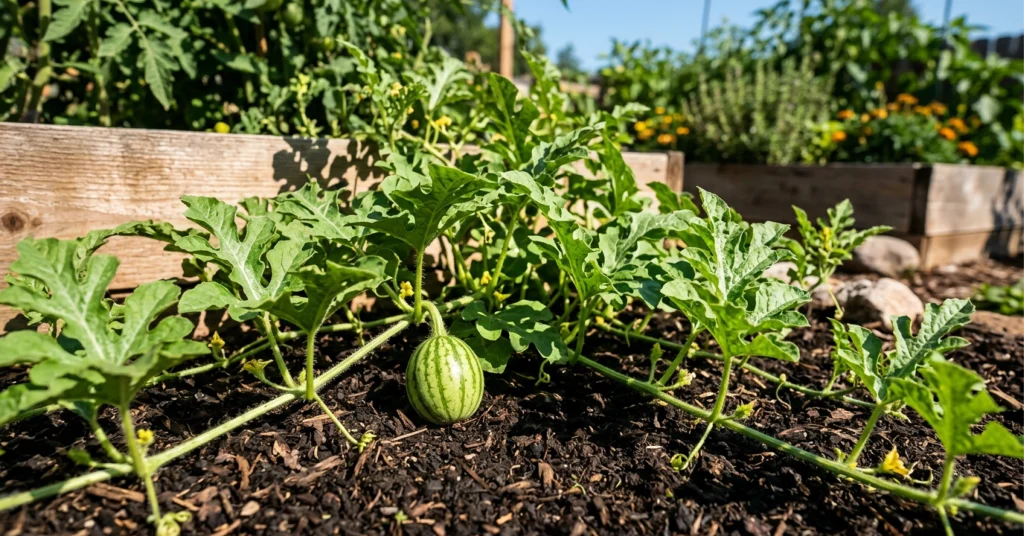
The easiest way to grow watermelon in most gardens is direct seeding after the last frost. You can transplant, but melon roots don’t love being disturbed. If you start seeds indoors, use biodegradable pots and move them out gently. If the soil is still cool, seeds may rot or sit there doing nothing.
Here is the simple planting process:
- Loosen the soil and mix in compost.
- Form low mounds or plant in flat rows if drainage is good.
- Sow seeds about 1 inch deep.
- Plant 2 to 3 seeds per spot, then thin to the strongest 1 or 2 seedlings.
- Water the area well after planting.
If you’re using transplants, plant them at the same depth they were growing in the pot. Don’t bury the stem deeper.
Black plastic mulch works well in cool climates because it warms the soil. Straw or shredded leaves also help, but wait until the soil is warm before adding thick organic mulch. Pile mulch too early, and you keep the ground cool.
If your season is short, choose early or smaller varieties. Big picnic melons are fun, but they need more time and more heat. New gardeners often do better with smaller fruits while they learn the rhythm of the plant. If you’re still building confidence, it also helps to grow a few easy vegetables for first-time gardeners alongside your melon patch.
Keep Water and Fertilizer Steady
Watermelon needs steady moisture, especially from sprouting through fruit set. Wild swings from bone dry to soaked create a lot of problems.
A good target is 1 to 2 inches of water per week. In many gardens, that means a deep soak once or twice a week. Sandy soil dries out faster and may need water every 2 to 3 days during hot weather. Heavier soil holds water longer and needs less frequent watering. Water at the base of the plant, not over the leaves, so you don’t invite mildew.
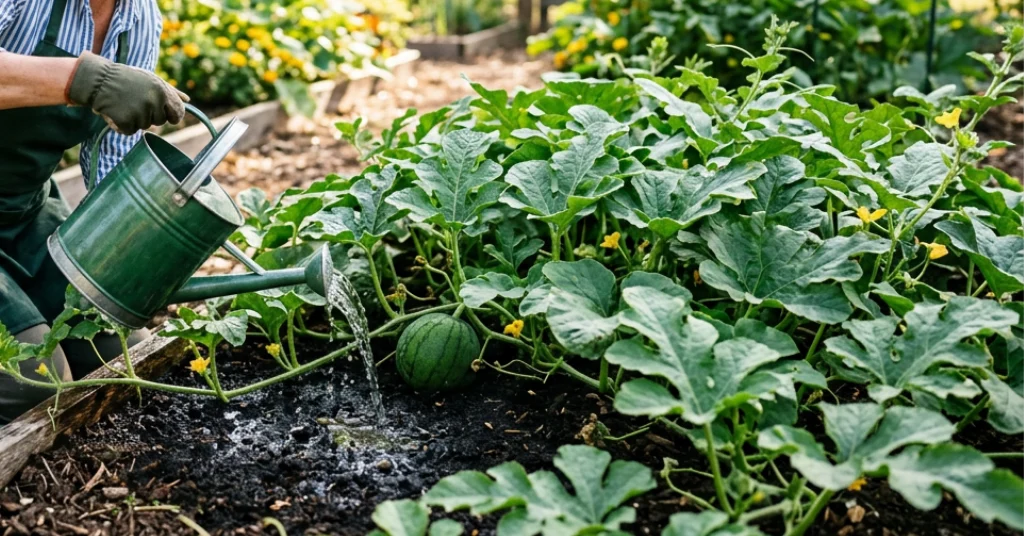
Once fruits start sizing up, keep the moisture even. When the melons are close to ripe, cut back a little. Don’t let the plants wilt, but don’t keep the soil soaked either. Slightly drier conditions near harvest can improve sweetness.
Fertilizer matters, but more isn’t better. Too much nitrogen gives you a jungle of leaves and not much fruit.
Start with compost mixed into the bed. After vines begin to run, feed with a balanced vegetable fertilizer or one that is a bit lower in nitrogen and higher in phosphorus and potassium. Follow the label rate. One light feeding at planting and one more after vines start spreading is enough to grow watermelon.
Mulch helps in three ways. It holds moisture, keeps weeds down, and keeps fruit cleaner. A small mat of straw, cardboard, or a thin board under each melon also keeps the bottom from sitting on damp soil.
Help Flowers Turn Into Fruit
Ever had a vine full of blooms and no watermelons? That’s usually a pollination problem.
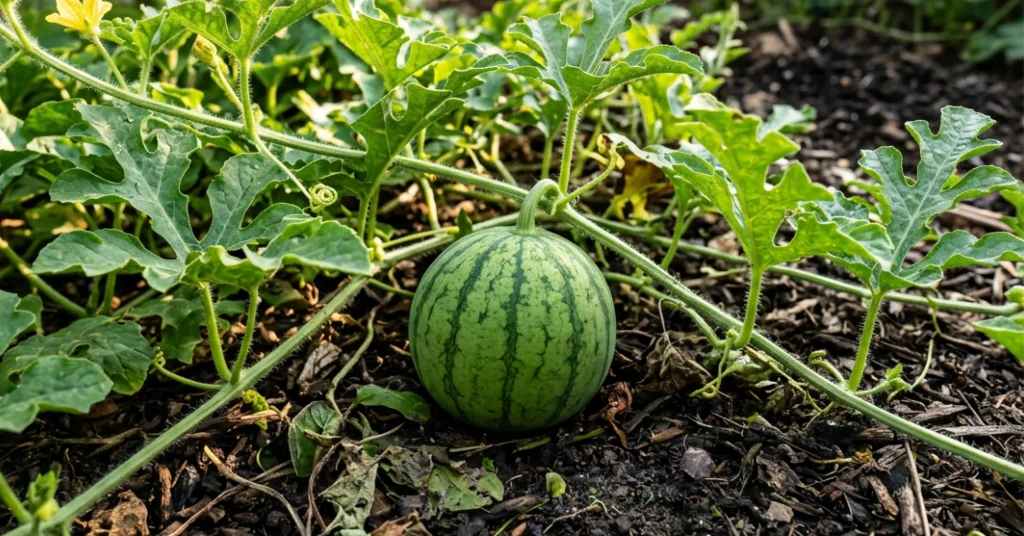
Watermelon plants make male and female flowers. Male flowers show up first. Female flowers have a tiny baby melon behind the bloom. Bees move pollen from the male flower to the female flower, and that’s what starts the fruit.
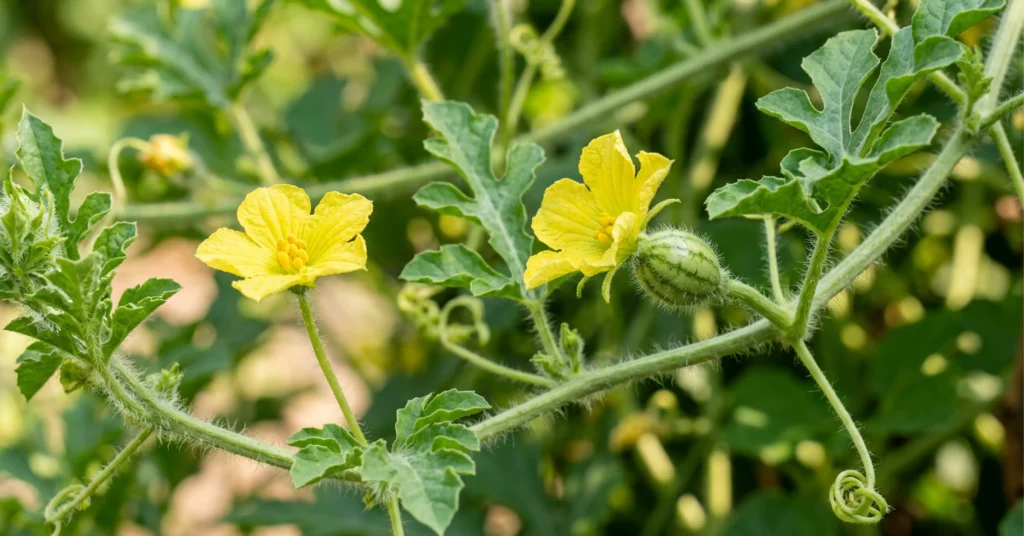
When you grow watermelon, and bees are scarce, hand pollination can save the day. Go out early in the morning while the flowers are open. Pick a fresh male flower, remove the petals, and brush the pollen-covered center onto the center of a female flower. You can also use a small paintbrush.
Poor fruit set can also happen when the weather is too cool, too rainy, or too hot. Heavy nitrogen feeding can make this worse because the plant puts its energy into leaves instead of fruit.
As fruits get bigger, keep them off wet soil. Set them on straw, cardboard, or a board.
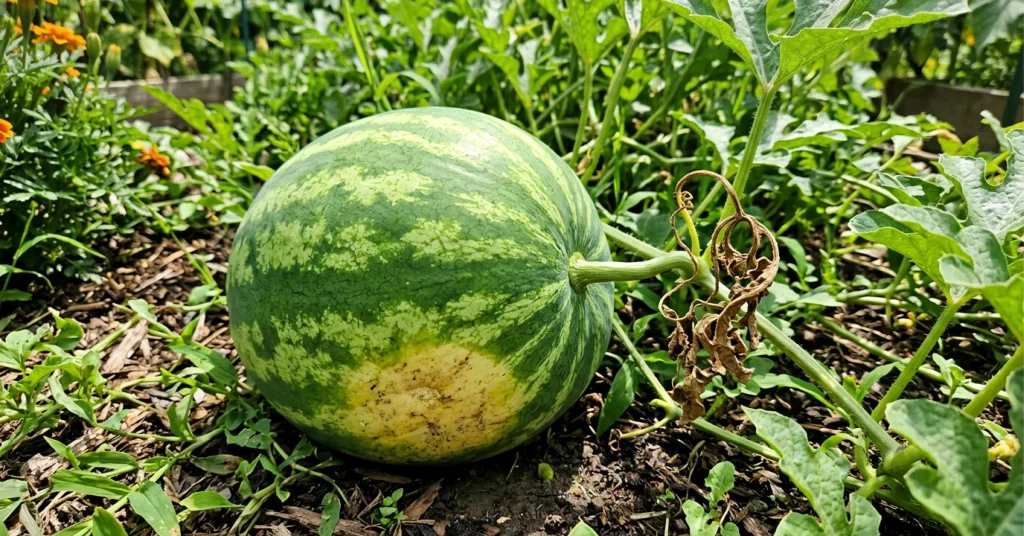
Knowing when to harvest is the fun part, and also the stressful part. Look for several signs together:
- The curly tendril closest to the fruit turns brown and dry.
- The spot touching the ground changes from pale green or white to creamy yellow.
- The rind looks dull instead of shiny.
- The skin resists a thumbnail more than an immature melon.
The famous thump test can help, but it isn’t the best first clue. Use it as a backup, not your only guide.
Fix Common Watermelon Problems Fast
Most watermelon trouble comes down to a few repeat offenders. Catch them early, and you’ll save a lot of fruit.
Yellow leaves often mean watering is off. Soggy soil can starve roots of oxygen, and dry soil stresses the plant fast. Older leaves near the base also yellow naturally as the plant ages. If new growth is pale, the plant may need feeding. If yellowing comes with spots, look closer for disease.
Poor fruit set usually points to weak pollination. Fewer bees, rainy weather, or too much nitrogen can all cause lots of flowers and little fruit. Hand pollinate in the morning and skip extra high-nitrogen fertilizer.
Splitting fruit almost always follows uneven watering. A melon sits dry, then gets a flood of water from heavy rain or deep irrigation. The inside swells faster than the rind can stretch. Keep soil moisture steady, and harvest ripe fruit on time.
Pests can show up fast. Aphids cluster on tender growth and leave sticky residue. Cucumber beetles chew leaves and can spread disease. Squash bugs sometimes move in, too. Check the undersides of leaves often. A hard spray of water can knock off aphids. Hand-pick larger insects when numbers are low. Row covers help early in the season, but remove them once flowers open so pollinators can get in.
Powdery mildew looks like white dust on leaves. It usually starts when plants are crowded or when air flow is poor. Space plants well, water the soil instead of the leaves, and remove the worst infected foliage. If mildew keeps spreading, use a product labeled for edible crops and follow the label exactly.
If a plant keeps struggling, don’t guess forever. Pull a leaf back, check the soil, and inspect the flowers. Watermelon tells you what’s wrong if you slow down and look.
Grow Watermelon
Watermelon isn’t hard because it’s fussy. It’s hard because it wants the right conditions at the right time. Warm soil, full sun, even watering, and solid pollination do most of the work.
Once you get that rhythm down, growing watermelon feels a lot less intimidating. Then one day, you’re cutting into a ripe melon from your own garden, and the whole thing feels worth it.