
This post may contain affiliate links. When you purchase through links on my site, I may earn a commission at no cost to you. See my Privacy Policy for details.
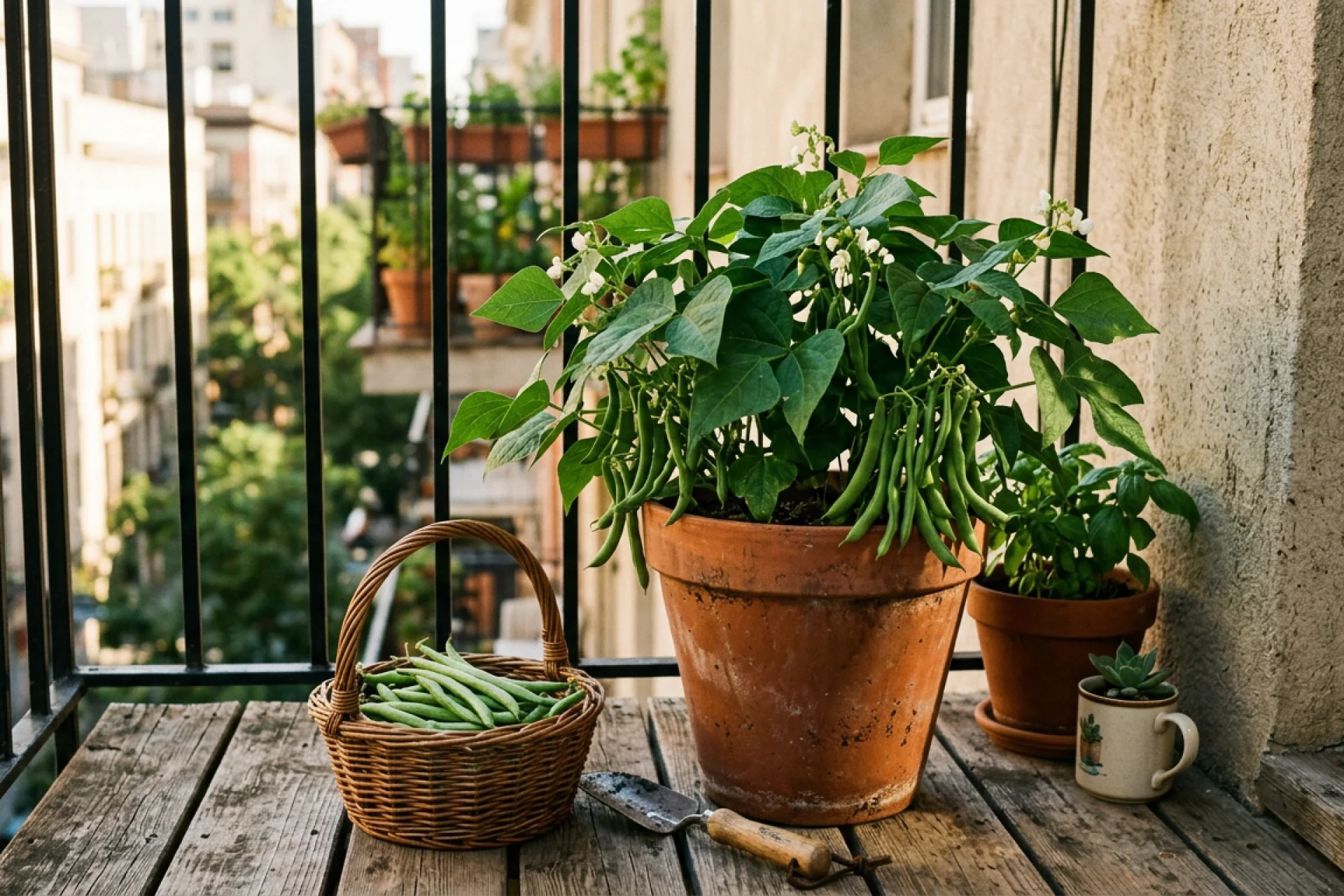
A good bush bean harvest doesn’t need a big backyard. Bush beans can fill a bowl from one sunny pot, one narrow raised bed, or a small patch beside your steps.
If you’ve got a patio, balcony, or compact garden, this crop is a smart pick. Bush types stay tidy, grow fast, and don’t ask for much once they’re settled. Start with the right setup, and you’ll be picking fresh beans before the season feels halfway over.
Why Bush Beans Are Made for Small Gardens
Bush beans are the easygoing cousin of pole beans. They grow in a low, compact mound instead of racing upward on long vines. Most stay around 1 to 2 feet tall and wide, which makes them a great fit for tight beds, grow bags, and roomy containers.
That compact shape is the big win. You don’t usually need a trellis, teepee, or fence. In a windy spot, though, a few short stakes with soft twine can help keep heavy plants from leaning over once the pods start coming in.
They’re quick, too. Many bush varieties are ready in about 50 to 60 days. That’s helpful in small spaces, because fast crops let you use the same spot again later. If you sow a second round 2 to 3 weeks after the first, you can stretch your harvest instead of getting one big flush all at once.
For beginners, look for dependable varieties like Provider, Contender, Roma II, Blue Lake bush, or Dragon Tongue. Seed packets usually tell you the plant height and days to maturity, and those two details matter a lot when space is tight.
Flat pods, round pods, yellow wax beans, purple beans, it all counts. In a small space, pick the kind your household will eat. The prettiest variety isn’t the best choice if it sits untouched in the fridge.
If you want a closer look at growing pole vs bush beans, that side-by-side comparison helps when you’re picking varieties.
The Best Pots, Raised Beds, and Sunny Spots
Bush beans love sun. Give them 6 to 8 hours a day, and they’ll reward you with fuller plants and more pods. A balcony with morning to early afternoon sun can still work, but growth may slow a bit.
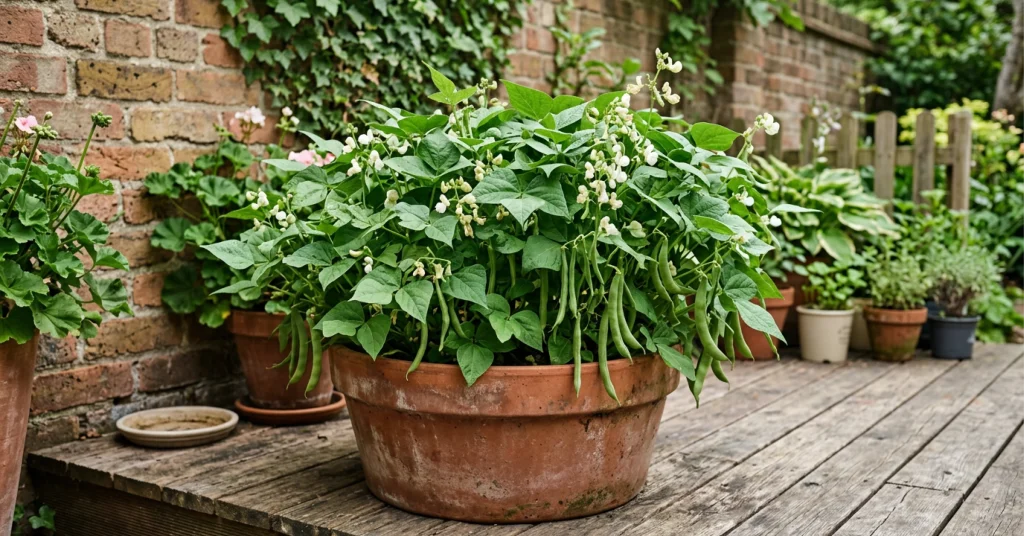
For containers, think wide before deep. Bush beans don’t need a giant pot, but they do need enough room for roots, airflow, and even moisture. A container about 8 to 10 inches deep is usually enough, as long as it has drainage holes.
Use potting mix in pots, not heavy garden soil. A mix that drains well but still holds some moisture is perfect. Stir in a little compost before planting, and you’re off to a good start.
These spacing guidelines keep plants productive without crowding them.
| Setup | Minimum size | Spacing |
|---|---|---|
| Round pot | 12 inches wide, 8 to 10 inches deep | 4 plants, about 4 to 5 inches apart |
| Window box or trough | 24 inches long, 8 inches deep | 6 to 8 plants, about 4 inches apart |
| Raised bed | 8 to 12 inches of loose soil | 4 to 6 inches apart, with rows about 12 to 18 inches apart |
Wider containers are easier to water, easier to harvest, and less likely to dry out by noon.
If you’re gardening on a balcony, place the pot where the wind is lower, like near a wall or railing. Saucers are fine, but don’t let them hold standing water after a storm.
Don’t crowd bush beans. A packed pot may look lush at first, but it usually gives you fewer pods.
How to Plant Bush Beans Step by Step
Beans are one of those crops that like to be planted right where they will grow. Skip the transplant tray. Direct sowing is simpler, and the plants usually do better.
Wait until frost danger has passed and the soil feels warm. Cold, wet soil can rot bean seeds before they sprout. If you’re planting in spring, patience pays off here.
- Fill your pot or bed with moist soil, then smooth the surface.
- Plant each seed about 1 inch deep.
- Space seeds about 2 to 3 inches apart at planting time.
- Water gently so the soil settles around the seed.
- Once seedlings are a few inches tall, thin them to about 4 to 6 inches apart.
Most seeds sprout in about a week, sometimes a little longer if nights are cool. If a few gaps show up, tuck in extra seeds while the rest are still small.
You don’t need to soak bean seeds first. Fresh seed and warm soil matter more than extra steps.
For a longer harvest, plant another small batch every 2 to 3 weeks. That works especially well in containers, because you can keep one pot producing while the next one gets started. In many places, you can keep sowing until about 8 to 10 weeks before your first fall frost.
If you grow a lot of food in pots, this list of container-friendly vegetable plants can help you fill the rest of your small garden, too.
A simple plant label is worth it. Bush beans come up fast, and once you start succession sowing, it’s easy to forget which pot went in first.
Simple Care for Healthy Plants and Better Yields
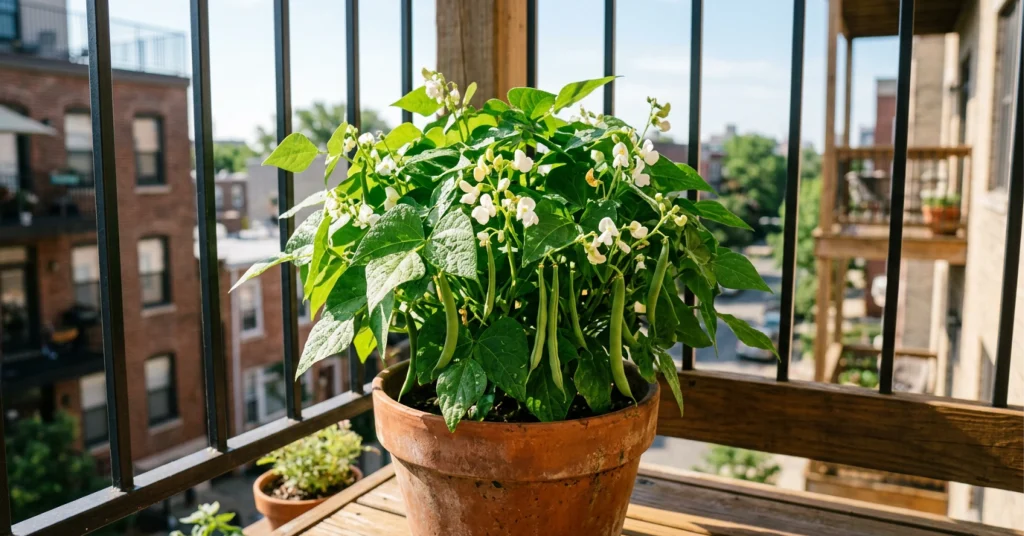
Bush beans are low-maintenance, but they do need steady water. In raised beds, that may mean a deep soak a couple of times a week. In containers, especially on hot patios or breezy balconies, you may need to water every day during summer.
The goal is even moisture. Letting the soil swing from bone-dry to soggy can lead to tough plants and fewer pods. A light layer of mulch helps, even in pots. Shredded leaves, straw, or fine bark can slow evaporation and keep roots cooler.
Don’t overfeed them. Rich fertilizer can push out lots of leaves and not many beans. If your potting mix already includes compost, you may not need much else. If growth looks pale or slow, a light feeding with a balanced vegetable fertilizer is plenty.
Beans usually self-pollinate, so you don’t need a crowd of bees to get pods. Flowers still set better when plants aren’t thirsty or stressed by heat.
Bush beans usually stand on their own. Still, exposed patios and upper-floor balconies can be windy. If stems start to lean, use small stakes or a short ring support. Think gentle backup, not a full trellis.
Keep the planting tidy. Pull weeds early, remove yellowing lower leaves, and give the plants room for air to move. If slugs or beetles show up, hand-pick early before a small planting turns into a buffet.
Small-Space Tricks That Boost Your Harvest
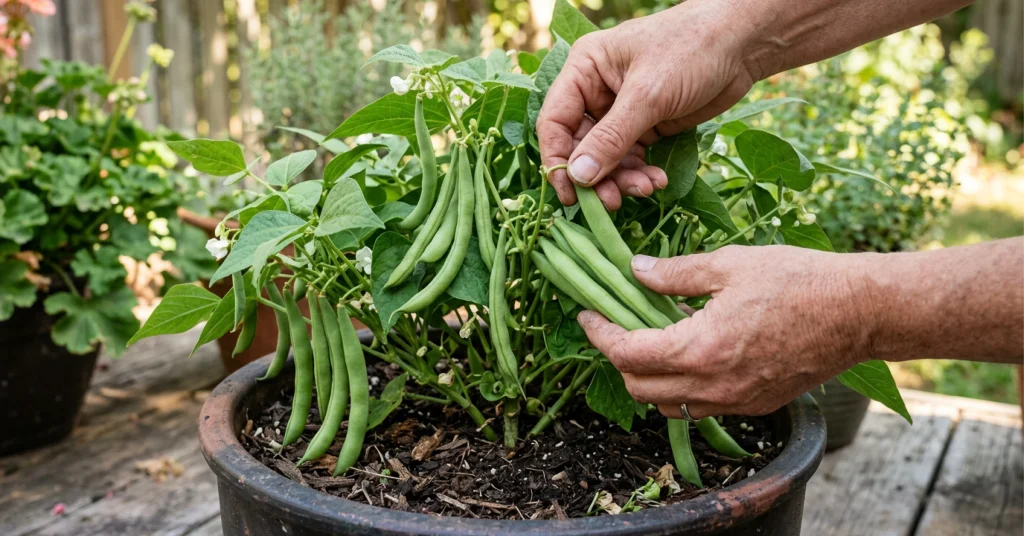
The easiest way to get more beans from less room is to pick often. Harvest pods when they’re firm, smooth, and before the seeds inside bulge too much. Regular picking tells the plant to keep producing.
Morning is a good time to harvest, especially in hot weather. The pods are crisp, and the plants aren’t stressed from afternoon sun. Use two hands if needed, one to hold the stem and one to pick, so you don’t snap whole branches.
Think in rounds, not one planting. A single sowing of bush beans often peaks fast. Two or three smaller sowings usually fit a patio or small bed better, and you’ll eat fresh beans longer.
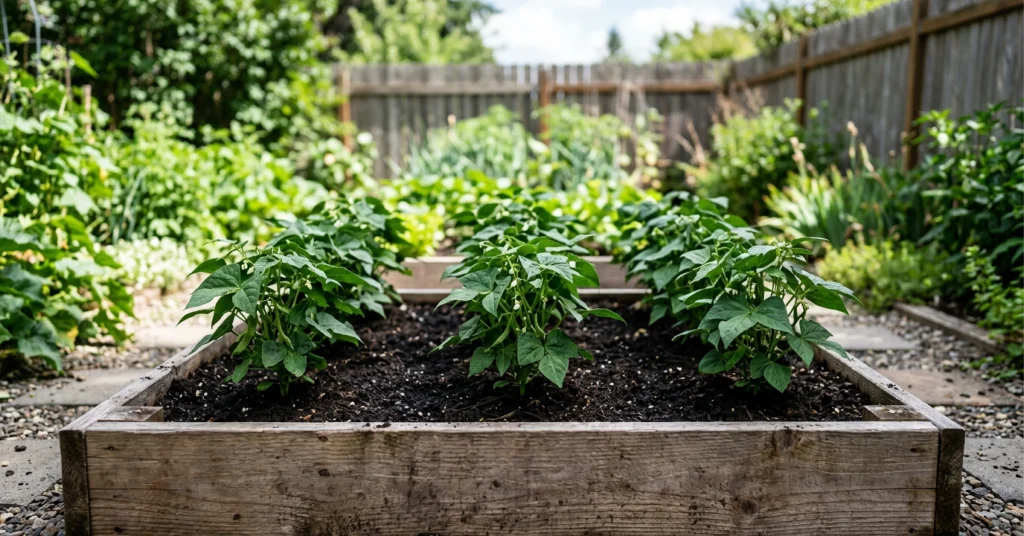
You can also borrow space early in the season. Tuck quick crops like lettuce or radishes between young bean plants, then harvest those before the beans fill out. In raised beds, use the corners and edges instead of saving them for larger crops.
If flowering slows during extreme heat, don’t panic. Beans often pause when summer gets harsh, then settle back in when temperatures ease a little. Keep watering, keep picking, and give the planting time.
Fresh-picked beans hold well in the refrigerator for a few days. If you get more than you can eat, blanch and freeze them while they’re still sweet and crisp.
A Small Space Is Plenty
A small garden can still grow a lot of food, and bush beans prove it fast. Give them sun, warm soil, and a little elbow room, and they’ll do the rest.
You don’t need tall trellises or a big bed to make beans worth growing. One pot, one raised bed corner, or one sunny strip is enough to get started, and often enough to make them a favorite crop year after year.