
This post may contain affiliate links. When you purchase through links on my site, I may earn a commission at no cost to you. See my Privacy Policy for details.
You walk out to check your potatoes or tomatoes, and something looks off. The leaves aren’t just a little nibbled. They’re lacy, like someone took tiny scissors to them overnight.
That’s the classic calling card of the Colorado Potato Beetle, a pest that can strip young plants fast and keep coming back if you don’t break its cycle. Potatoes get hit hardest, but tomatoes, eggplant, and sometimes peppers can also be targets since they’re all in the nightshade family.
The good news is you don’t need a complicated plan. You need a simple routine: learn to ID every life stage, understand when damage spikes, spot problems early, and use practical controls that rely mostly on your hands and timing. If you want more context on other common garden pests, it helps to see how different pests leave different “fingerprints” on leaves.
Identify Colorado Potato Beetles (All Life Stages)
Colorado potato beetles are easy to manage when you catch them early. They’re a lot harder when you notice them after the plants look like skeletons. So the real win is learning what to look for before the chewing gets serious.
Most mix-ups happen with helpful insects, especially ladybugs. That’s why it helps to slow down, flip leaves, and check details like body shape and where you found them. Colorado potato beetles stick close to nightshade plants, and they spend a lot of time on leaf undersides and along stems.
What adults, eggs, and larvae look like
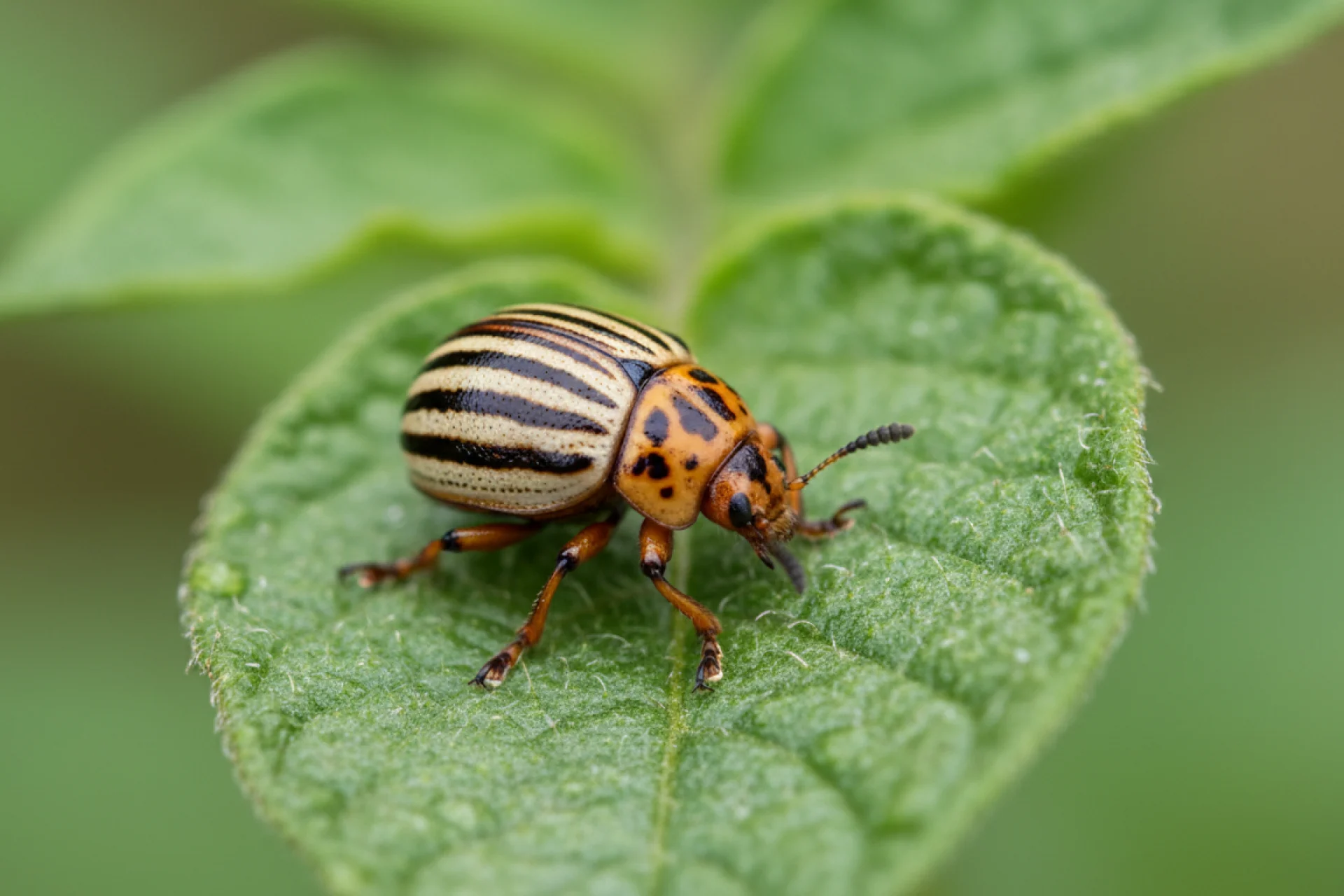
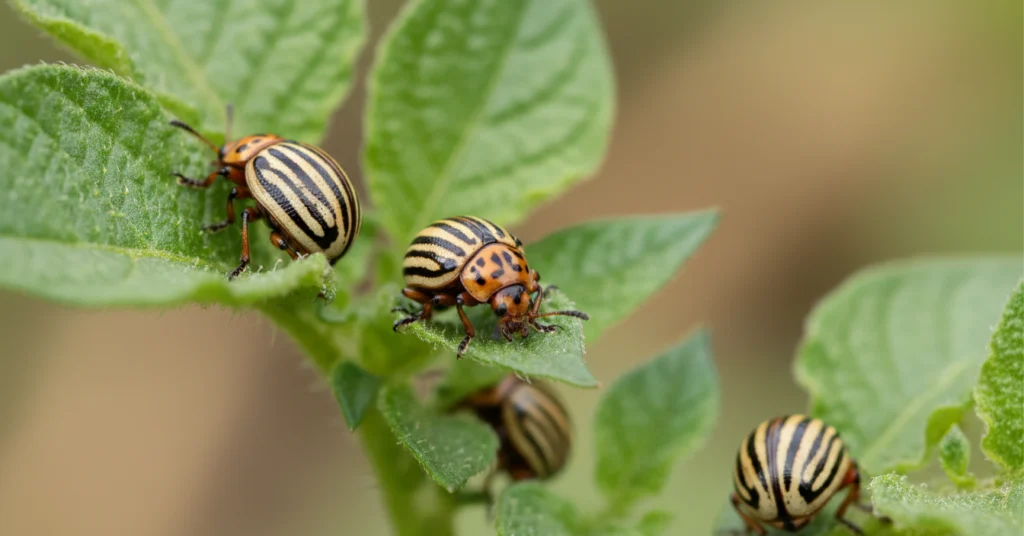
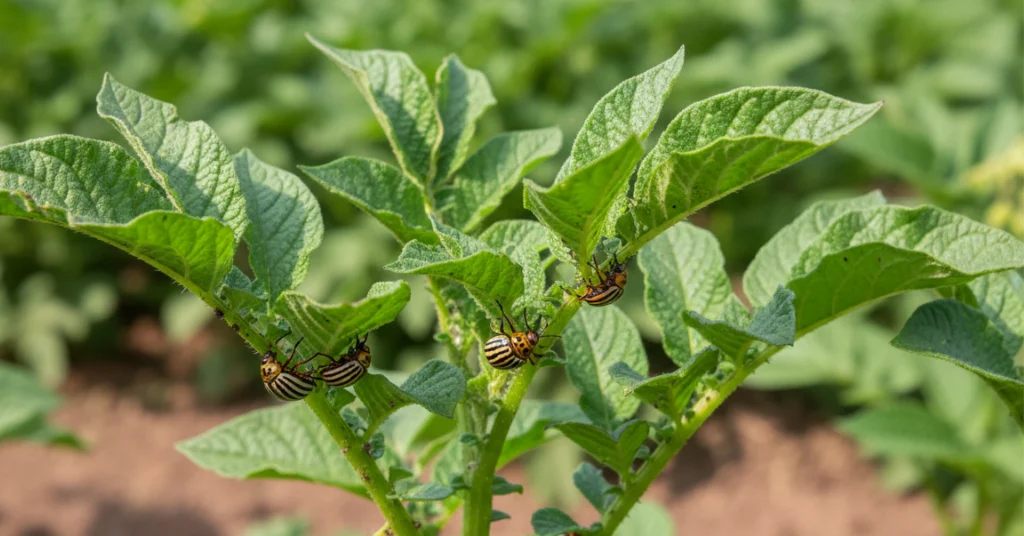
Adults are oval and humpbacked, about 3/8 inch long (around fingernail size). They’re yellow-orange with 10 black stripes on their wing covers (five per side). Look for dark markings on the head and the area behind the head. Adults often sit near stems, leaf edges, and the top of plants once the weather warms.
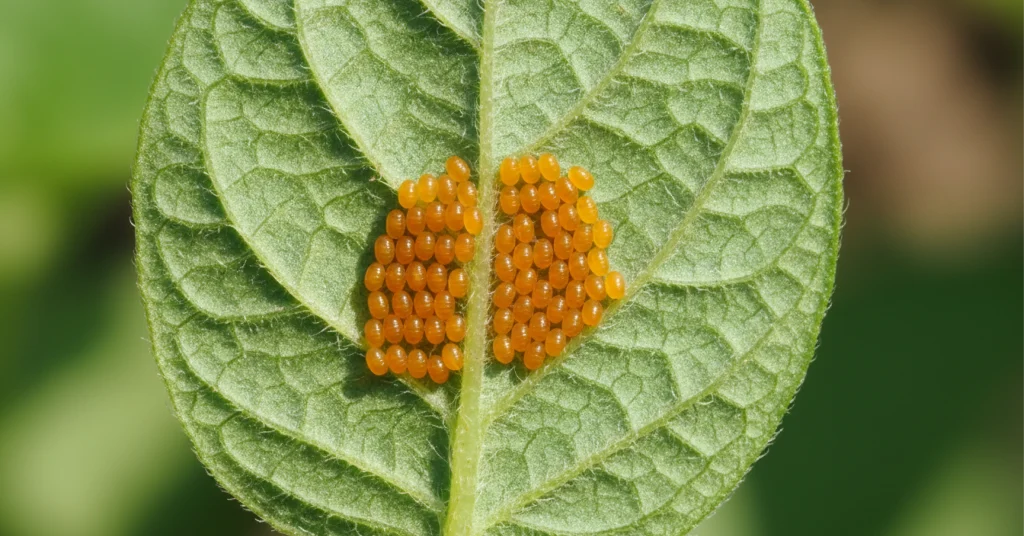
Eggs are bright yellow-orange, oval, and laid in clusters on the undersides of leaves. A cluster often has around 20 to 60 eggs. If you find eggs, you’re early, and that’s exactly where you want to be.
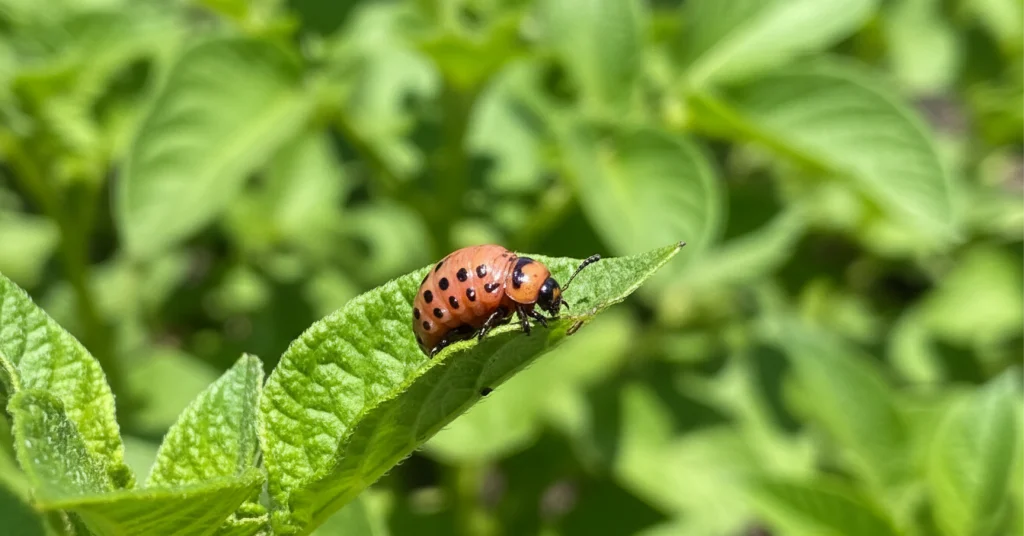
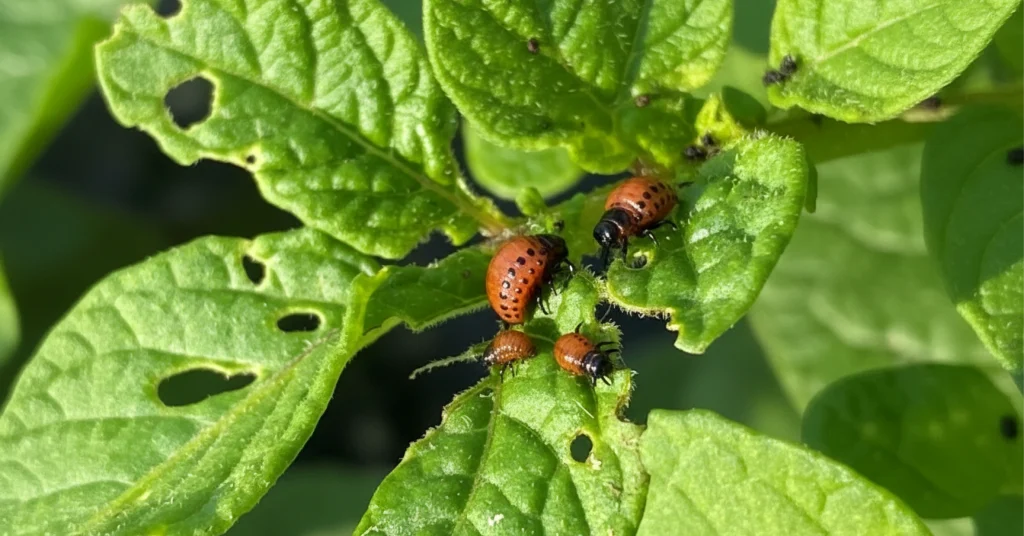
Larvae start out brick-red with black heads and legs. As they grow, they turn pink to orange, get plumper, and show two rows of black spots down each side. Full-grown larvae can reach about 1/2 inch. They tend to feed in groups, especially when they’re small, and they usually stay near where they hatched.
A quick plant check you can do in under 2 minutes
If you only have time for one habit, make it this one. A short scan done often beats a long scan done once.
Here’s a fast check that works in real gardens:
- Check five plants. Pick the ones that look weakest first.
- Flip three leaves per plant (one top, one middle, one lower).
- Look for egg clusters first. They’re bright and easy to spot.
- Then look for tiny larvae near the eggs, usually grouped together.
- Finally, check for adults near stems and leaf edges.
Early morning helps because beetles move more slowly when it’s cool. Also, keep a small cup of soapy water with you. When you spot adults or larvae, you can knock them straight in without a second trip.
If you can catch eggs and tiny larvae, you’re stopping the problem before the heavy feeding stage even starts.
Lifecycle: When They Show Up and Why They Return
Colorado potato beetles don’t show up by accident. They follow your planting choices, and they love consistency. If potatoes or tomatoes grow in the same spot each year, the beetles have an easy path back to dinner.
They also have a sneaky advantage: adults survive winter in the soil. That means last year’s problem can become this year’s surprise, even if your seedlings looked perfect two weeks ago.
In many areas, gardeners see one to two generations per year, depending on the weather. In warm conditions, the full cycle can be as short as 30 to 50 days, but a two to three-month window is common when you include staggered egg laying and changing temps.
Favorite plants and where they spend winter
These beetles mostly feed on potatoes, tomatoes, and eggplants, and they sometimes feed on peppers. They’ll also use wild nightshades as backup food. If you have nightshade weeds nearby, you’ve basically left snacks on the counter.
Adults overwinter buried in soil, often close to last year’s host plants. They emerge in late spring (often April to May, depending on local temperatures), then they feed, mate, and start laying eggs.
That’s why last year’s planting spot matters so much. It’s also why rotation works, even in a simple backyard setup.
Simple lifecycle timeline
Timing helps because not all stages are equally easy to stop. Eggs and small larvae are the easiest targets. Big larvae are the hungriest. New adults restart the cycle.
This simple timeline helps you plan your checks:
| Stage | What’s happening | Typical timing |
|---|---|---|
| Adults emerge | Feed, mate, start egg laying | Late spring |
| Eggs hatch | Small larvae appear near egg clusters | 4 to 9 days after eggs are laid |
| Larvae feed | Heavy leaf loss, fast growth through 4 stages | 2 to 3 weeks |
| Pupation | Larvae drop to the soil and transform | about 5 to 10 days |
| New adults | More feeding, possible second generation | Summer |
The key takeaway is simple: most leaf loss happens during the larval feeding window. Stop larvae early, and the season gets calmer fast.
What Colorado Potato Beetle Damage Looks Like
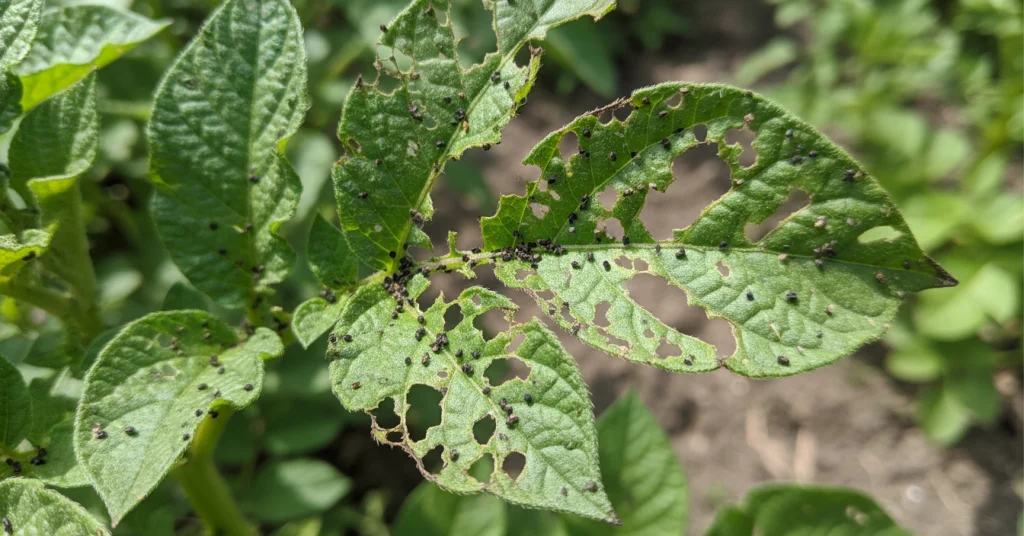
A little chewing happens in every garden. The trouble starts when chewing turns into defoliation, especially on young plants. Colorado potato beetles can take a plant from “fine yesterday” to “stressed and stunted” in a short stretch of hot weather.
Both adults and larvae chew leaves. They often begin on lower leaves, then move upward as food disappears. The damage usually looks messy and irregular, not neat like a scissor cut.
Early signs to watch for
When you know the early clues, you can act before the plant pays the price. Watch for:
- Small holes that quickly turn into lacey patches
- Skeletonized leaves, where veins remain, but tissue is gone
- Missing leaf edges, especially on the lower leaves first
- Black frass (droppings) on leaves and below feeding spots
- Larvae clustered together, often near the leaf underside midrib
If foliage gets stripped, beetles may nibble stems and even fruit, especially on tomatoes and eggplant. On potatoes, losing too many leaves early can cut yields dramatically because the plant can’t photosynthesize enough to build tubers.
When to act fast vs. when plants can recover
Seedlings and fresh transplants need quick action, even if you only see a few larvae. They don’t have extra leaf area to spare.
Larger plants can handle some feeding, especially if they’re growing fast. However, repeated stripping slows growth and reduces potato tuber set. It also makes plants more likely to struggle in heat or drought.
As a practical rhythm, check every few days during peak season. If you’ve already found eggs or larvae once, switch to daily checks for a week or two. That short burst of attention often stops a full-blown outbreak.
How to Control Colorado Potato Beetles
Colorado potato beetles are famous for developing resistance when people rely on one product over and over. So the best home garden plan uses layers: prevention first, then hands-on removal, then targeted organic sprays only if needed.
Prevent them before they start
Prevention sounds boring until you see how well it works. These steps don’t need perfect execution, they just need consistency.
Crop rotation helps most. Move potatoes and other nightshades away from last year’s spot. In a perfect world, that’s hundreds of yards. In a normal yard, go as far as you can, even if it’s just the other side of the garden.
Row covers also work well early in the season. They block adults from reaching plants and laying eggs. Just remember, pollination needs. Potatoes don’t need insect pollination for tubers, but tomatoes and peppers benefit from airflow and flower access. Remove or manage covers once flowering ramps up.
Mulch can reduce successful pupation and make it harder for adults to pop up right next to the plant. Straw mulch is common, and some gardeners also use plastic mulch as a barrier.
Cleanup matters too. Remove plant debris at season’s end, and keep nightshade weeds under control. For broader plant care and prevention ideas, these tomato pest tips can help you build routines that prevent several common issues at once.
Finally, fall tilling (where appropriate for your garden and soil plan) can expose overwintering adults to cold and birds. It won’t erase the problem alone, but it can reduce spring pressure.
Handpicking and helpful bugs
Handpicking sounds old-school because it works. For small gardens, it’s often the most effective tool you have.
Go out in the morning with a cup of soapy water. Knock adults and larvae into it, and crush egg clusters when you find them. Repeat daily for 1 to 2 weeks. That short window can break the cycle and protect new growth.
At the same time, make your garden friendlier to predators. Ladybugs, ground beetles, and tiny parasitic wasps all help in different ways. Small flowers and herbs nearby give them nectar and shelter, so they stick around.
If you garden in pots or tight spaces, you can still support beneficials. Even a few companion plants in containers can help balance pest pressure. This guide has some great natural pest control ideas for containers that fit small gardens without feeling like extra work.
Some gardeners also use chickens to scratch and hunt, usually in off-season beds. It can help, but it depends on your setup and how much you want them “helping” your plants.
Organic sprays
Sprays belong at the end of the plan, not the start. Use them when you see larvae building faster than you can remove them, or when plants are too large to check well.
A few organic options can work well when timed right:
Bacillus Thuringiensis (BT) targets Colorado potato beetle larvae best when they’re small. Apply it right as eggs hatch, and spray the undersides of leaves where larvae feed. Because it’s stage-specific, it won’t do much against adults.
Spinosad can work on larvae and some early adults, but it can also harm beneficial insects if misused. Spray in the evening, follow label directions, and avoid spraying open flowers when pollinators are active.
Neem oil may help disrupt feeding and growth, especially on young larvae. It’s not always a knockout punch on its own, but it can be useful when paired with handpicking.
A newer “no-kill” helper many gardeners like is kaolin clay (often sold as a barrier spray). It coats leaves and makes plants less appealing to feeding beetles. It can reduce damage without the same resistance concerns.
Avoid relying on the same product all season. Rotate tactics, and keep the non-spray steps going.
Colorado potato beetles feel overwhelming when you first see those lacey leaves, but you can get ahead of them with small, steady actions. Flip leaves often, target eggs first, and hit tiny larvae fast because that’s when control is easiest.
Save this simple routine and use it during peak season:
- Quick leaf-flip inspections every few days (daily during outbreaks)
- Remove egg clusters as soon as you see them
- Handpick small larvae before the heavy-feeding stage
- Use row covers early when it makes sense
- Rotate nightshades away from last year’s planting spot
- Use sprays only if needed, and don’t repeat one product nonstop
Stick with it, and your plants can stay leafy and productive. Consistent attention beats big infestations, and your future self will be so glad you started early.