
This post may contain affiliate links. When you purchase through links on my site, I may earn a commission at no cost to you. See my Privacy Policy for details.
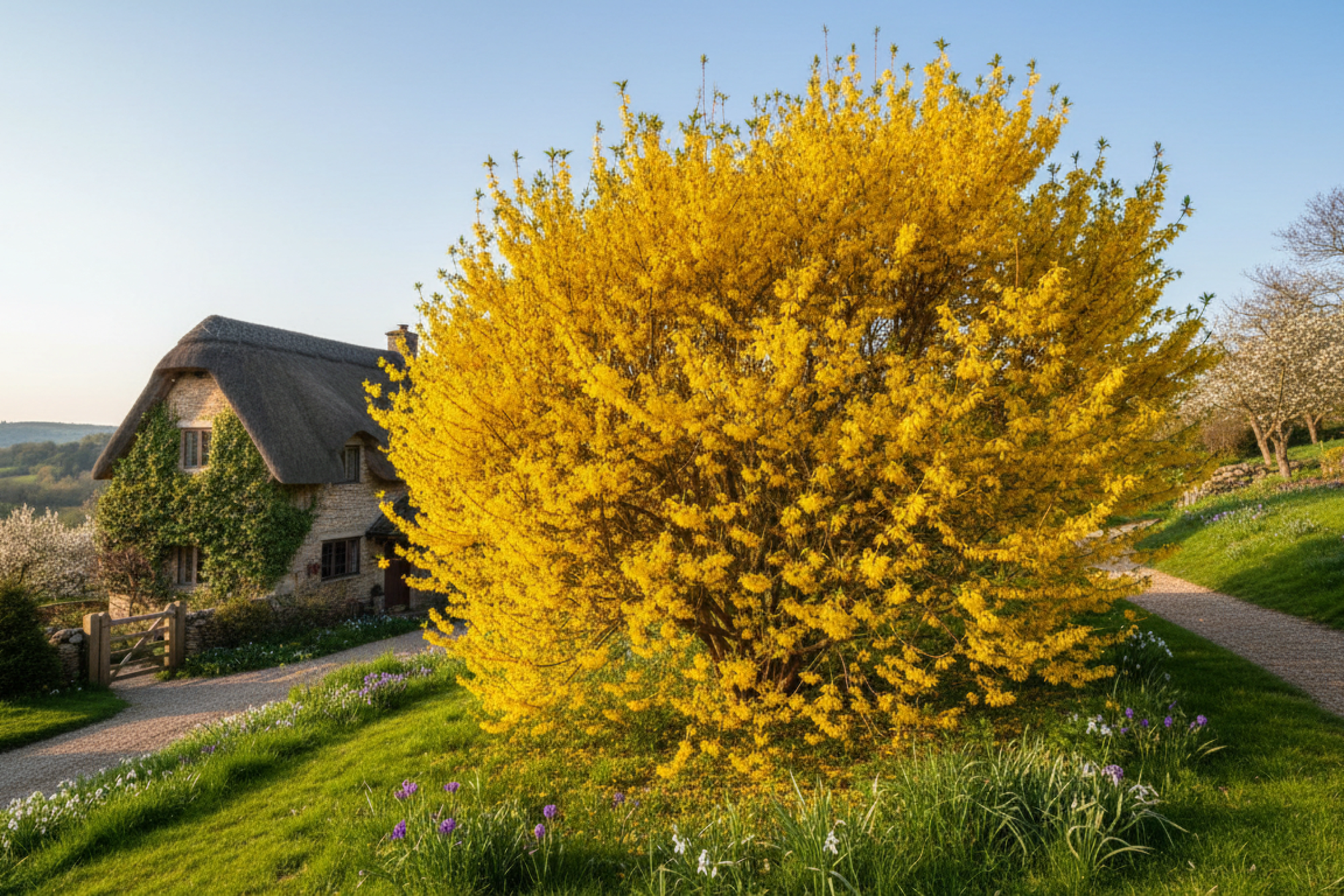
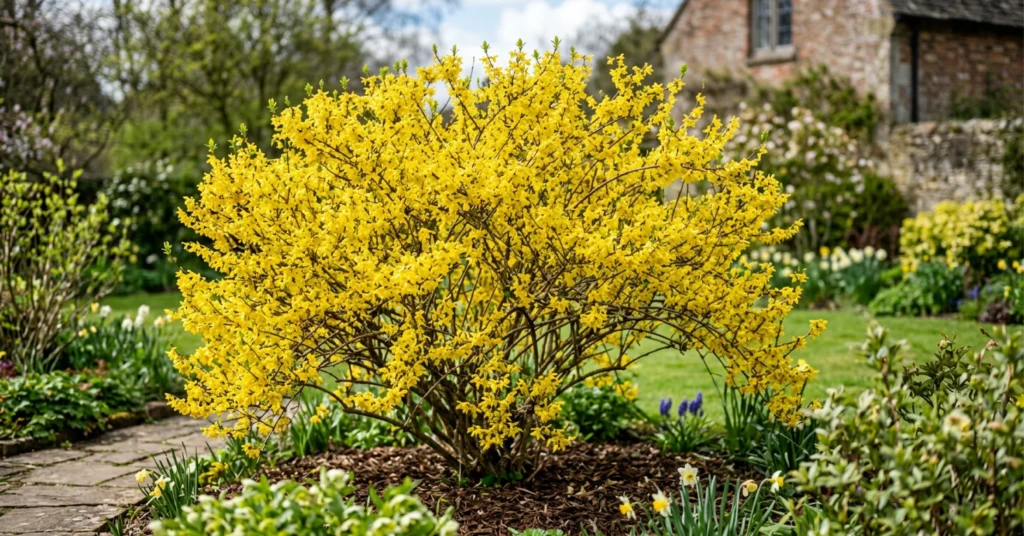
Those bright yellow sprays of flowers are hard to miss. Forsythia shrubs bloom early, often before the leaves even show up, so they look like sunshine poured over a pile of branches.
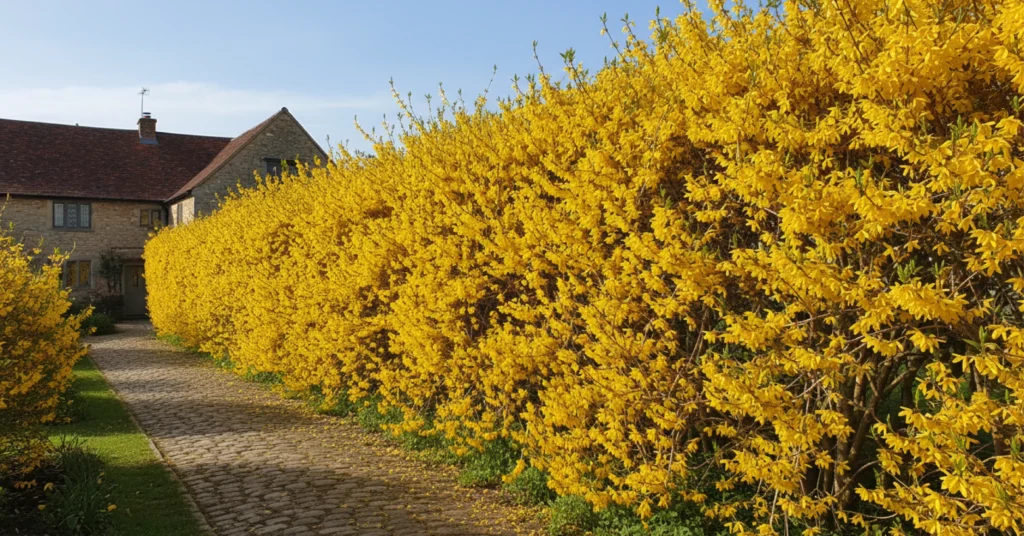
Gardeners love forsythia because it grows fast, asks for very little, and fills space quickly. You can use it as a cheerful hedge, a screen along a fence, or a single focal plant that wakes up the whole yard.
If you’re planning your spring planting in March, you’re in the perfect window to make good choices. This guide walks you through picking the right spot, planting well, simple forsythia care, bloom timing, and pruning the right way so it keeps flowering year after year.
Getting to Know Forsythia Shrubs Before Planting
Forsythia is a deciduous shrub, which means it drops its leaves in the fall. Then, in early spring, it blooms on bare branches. That’s why it looks so dramatic when everything else still seems asleep.
Most classic forsythia bushes grow quickly and get big. A mature plant often reaches 10 to 12 feet tall and wide, depending on the variety and pruning. That size is wonderful for a living fence, but it can feel huge if you tuck it under a window “just for a little color.”
Forsythia is commonly grown in USDA zones 5 to 8. It tolerates many soils and bounces back from many beginner mistakes. That said, it has two strong opinions: it wants decent drainage, and it flowers best with plenty of sun.
Common ways to use forsythia shrubs in the landscape include:
- As a hedge or screen along property lines
- In mixed borders behind spring bulbs and early perennials
- On banks and edges where fast growth helps fill in space
- As a stand-alone burst of spring color near an entry or patio
It’s a simple shrub, but placement matters. Put it in the right spot now, and you won’t fight it later.
When Does Forsythia Bloom?
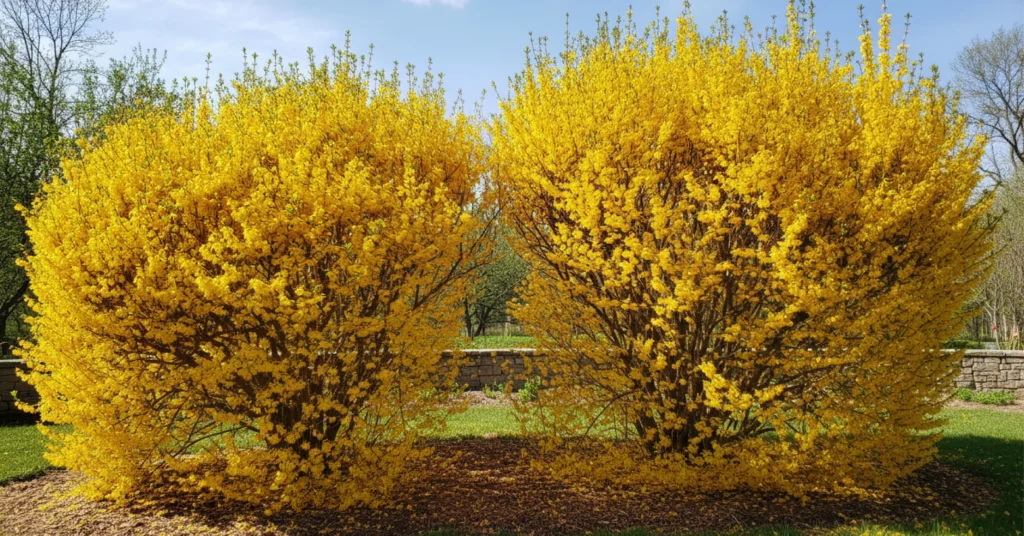
Forsythia typically blooms in early spring, often March to April in many areas, and usually before leaf-out. The show can last around 2 to 3 weeks, although wind, heavy rain, or a sudden warm spell can shorten it.
Climate shifts bloom time a lot. In a warm year, you may see flowers earlier than usual. In a cold year, buds can hold tight and wait. Microclimates matter too. A shrub planted near a sunny wall often blooms earlier than one out in the open.
Three things make the biggest difference in how many flowers you get:
- Sunlight: More sun usually means more blooms.
- Pruning timing: Prune too late, and you remove next year’s flower buds.
- Shade and crowding: Dense shade and tight competition can reduce flowering.
If you remember only one thing about forsythia, make it this: prune right after it flowers, not later in summer or fall.
Picking a Variety and Size That Fits Your Space
Choosing the right forsythia size up front saves you years of “why is this always in the way?” pruning. A shrub that wants to be 10 feet wide will keep trying. You can trim it back, but constant shearing often leads to a tangled plant with flowers only on the outside.
If you have a smaller yard, look for compact or dwarf options. A popular example is ‘Fiesta’, which stays much smaller and needs less pruning. On the other hand, if you want a taller screen or a bold statement, bigger types like ‘Lynwood Gold’ can give you that classic wall of yellow.
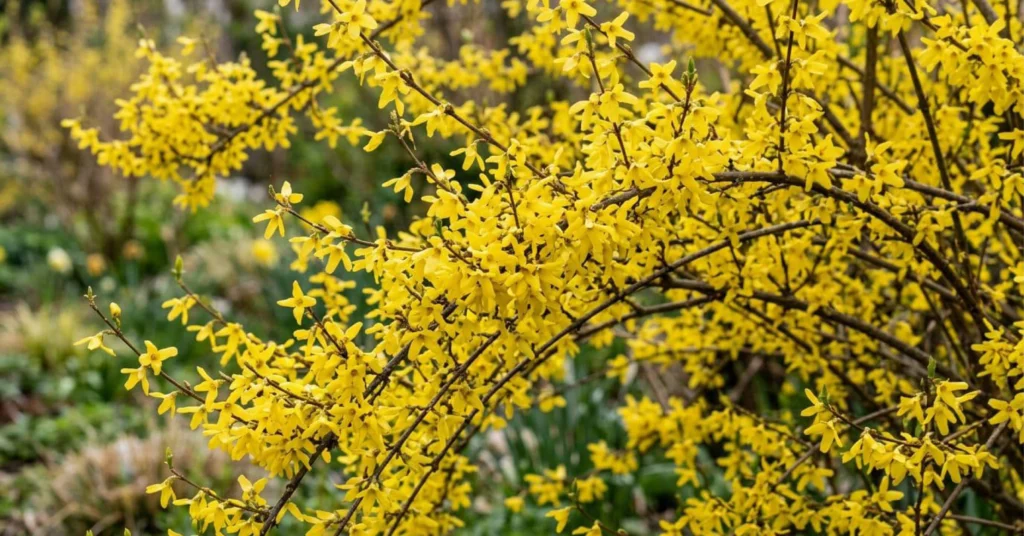
You’ll also see weeping forms, such as Forsythia suspensa. These can look stunning, spilling over a wall or softening the edge of a slope. Just be sure you’re giving them room to arch, because that graceful shape is the whole point.
A good rule: pick dwarf for foundation beds and tight corners, and pick larger types when you truly want height, spread, and fast coverage.
How to Grow Forsythia Shrubs, Step By Step
Forsythia shrubs are easy to plant, but a few small details make a big difference later. The best planting windows are early spring or fall. In spring, roots grow as the weather warms. In the fall, roots settle in while the top slows down.
Here’s a simple plan you can follow in one afternoon:
- Pick a spot with good drainage and sun. Full sun gives the best flower show.
- Dig a hole 2 to 3 times wider than the root ball. Keep it the same depth as the pot.
- Check the roots. If the plant is pot-bound, gently loosen and tease out circling roots.
- Set the shrub in the hole. The top of the root ball should sit level with the surrounding soil.
- Backfill with the original soil. Mix in compost if your soil is very sandy or heavy clay.
- Water deeply right away. This settles soil around roots and removes air pockets.
- Mulch with about 1 to 2 inches. In hotter, drier yards, you can go a bit thicker, but keep mulch a few inches away from stems.
Forsythia tolerates a lot, but it doesn’t like “wet feet.” If water sits in that spot after rain, choose another location or improve drainage before you plant. Root rot is one of the few ways this tough shrub can fail.
Where to Plant: Sun, Soil, and Spacing
Aim for full sun, which usually means about 6 or more hours of direct light. Forsythia will still grow in partial shade, but the blooms often thin out. If you’re planting for flowers, sunlight is your best friend.
Soil matters less than you might think, as long as it drains well. Forsythia does best in soil that’s been improved with compost and organic matter. It’s also happiest in a near-neutral range, around pH 6.8 to 7.7, although many yards fall close enough without any special testing. If you are interested in testing your soil, I recommend this testing kit.
Spacing is where many gardeners get surprised. Forsythia bushes can spread widely, and they look best when their branches can arch naturally.
A practical spacing tip: plan around the shrub’s mature width, not the cute little nursery pot. If a variety matures 8 feet wide, give it close to that. Planting 2 feet from a fence may work for a year or two, but it usually turns into a pruning chore.
Watering and Mulch for Forsythia Shrubs
Right after planting, water deeply. Then keep watering consistently through the first growing season. A common rhythm is once or twice a week, depending on heat, soil type, and rainfall. The goal is to build a deep root system, not to keep the surface damp.
After the first year, forsythia becomes fairly drought-tolerant. Still, it will look better with support during long dry spells. If leaves start to droop, curl, or look shriveled during hot weather, water slowly and deeply. Think of it like filling a sponge. A quick sprinkle barely helps.
Mulch helps in several ways. It holds moisture, keeps weeds down, and protects roots from temperature swings. Just keep mulch pulled back from the base of stems. When mulch stays piled against wood, rot and pests get a foothold.
Fertilizer and Feeding
Forsythia usually doesn’t need much fertilizer. If the shrub is in decent soil and gets sun, it will grow.
A simple routine that works for many gardeners is a yearly top-dressing of compost, plus refreshing mulch. That alone often keeps growth steady and flowers strong.
If your forsythia plant grows weakly, has pale leaves, or barely puts on new shoots, a slow-release shrub fertilizer in early spring can help. Follow the label and don’t double it “for good measure.”
Too much nitrogen pushes lots of leafy growth with fewer blooms. You’ll end up with a green shrub that forgot its main job.
Forsythia Care Through the Seasons
Once established, forsythia shrubs are low-maintenance. Still, a little seasonal rhythm helps you catch small problems before they become big ones.
In spring, enjoy the blooms and watch how the plant flowers. Note which areas bloom best, because that often points to sun patterns and pruning needs. After flowering, this is also the time for pruning (more on that below).
During summer, your main job is moisture management. Water during dry stretches and keep the base weed-free. Weeds steal water, and a crowded base can trap moisture against stems.
In the fall, keep an eye on drainage as rains return. Rake away heavy leaf piles that stay wet at the base. Also, skip late-season fertilizing, because it can push tender growth that won’t harden off before the cold.
Through winter, the shrub rests. If snow loads bend branches, you can gently brush off heavy, wet snow. Also, take a quick look at the structure. Bare branches make it easier to spot dead wood and overcrowding, which you’ll want to address after bloom.
Why Your Forsythia Shrub Has Lots of Leaves but Few Flowers
A forsythia bush with plenty of leaves but few blooms usually points to one of these issues.
Not enough sun is the top culprit. Even a few years of growing shade from nearby trees can slowly reduce flowering. If moving the shrub isn’t possible, thinning nearby branches to let in more light can help.
Pruning at the wrong time is another big one. Forsythia sets buds that will open the following spring. If you prune in late summer, fall, or winter, you’re often cutting off next year’s flowers.
Overfeeding also plays a role. High-nitrogen lawn fertilizer drifting into the bed can encourage leafy growth. If your forsythia sits next to a fertilized lawn, keep that in mind.
Finally, late frosts can reduce blooms in some years. You can’t control the weather, but you can control the sun, pruning timing, and feeding.
Fast Fixes for Common Problems
If your forsythia bushes look stressed, you usually don’t need a complicated plan. Start with the basics and watch how the plant responds over the next couple of weeks.
Dry soil shows up as drooping or shriveled leaves in the heat. Water deeply, then add mulch to slow moisture loss. Crowded growth looks like dense stems with poor airflow and flowers only on the outside. Thin some stems (at the base) after bloom to open the center.
Wet roots are the most serious issue. If the area stays soggy, improve drainage and stop overwatering. Also, make sure the shrub isn’t planted deeper than it was in the pot. A buried crown can stay too wet and slowly decline.
Forsythia is forgiving, so calm, steady changes usually work better than drastic ones.
How to Prune Forsythia Shrubs
Pruning is where many people get frustrated with forsythia shrubs. The shrub grows fast, so it’s tempting to trim it whenever it looks messy. The problem is that forsythia blooms on older wood, and it sets buds well before the next spring.
So the key isn’t just how you prune. It’s when.
Use sharp pruners and loppers, and make clean cuts. If you’re moving between plants, especially if one looks unhealthy, wipe blades to keep problems from spreading.
The Best Time to Prune Forsythia Shrubs
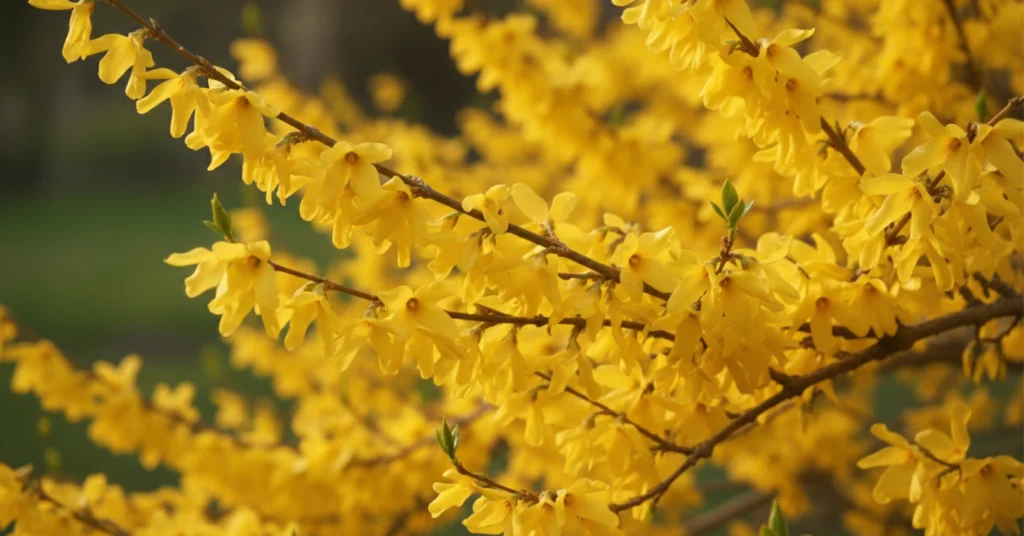
Prune right after it finishes blooming. In many areas, that’s late spring. Once the flowers fade, the shrub starts growing and setting buds for next year.
A simple yearly method looks like this:
Start by removing dead or damaged wood. Then look for the oldest, thickest stems. Cut some of these all the way down at the base. A helpful rule of thumb is to remove up to about 1/5 of the oldest stems each year. This keeps the shrub youthful and blooming well.
Next, shorten a few of the flowered stems by cutting back to a strong outward-facing shoot. This guides new growth out and away from the center. Finally, step back and check the shape. Aim for an open, arching form, not a tight ball.
Avoid shearing forsythia like a boxwood. Shearing creates a dense outer shell and bare wood inside, which usually means fewer blooms over time.
Rejuvenation Pruning for Overgrown Forsythia Bushes
Sometimes a forsythia gets tall, bare in the middle, and awkward. It may still flower, but mostly at the tips, out of reach and out of view. This is when rejuvenation pruning helps.
You have two options, and the gentler one is usually best.
With gradual renewal, prune right after bloom for 2 to 3 years in a row. Each year, remove a portion of the oldest stems at the base and thin the center. Over time, new shoots replace the old framework. The shrub stays nicer looking through the process, and you usually keep at least some flowering each spring.
A hard cutback is faster but more stressful. You cut most stems down low, and the shrub responds with a flush of new shoots. The trade-off is simple: you’ll likely lose a lot of bloom for a season while it rebuilds. Still, if your shrub is truly out of control, this reset can be worth it.
After either method, expect vigorous new growth. Then guide that growth with light thinning and timely pruning right after bloom.
Forsythia shrubs are one of the easiest ways to get bold early spring color. Plant them in the sun, give them well-drained soil, and water steadily through the first year. Go light on fertilizer, because too much can mean leaves instead of flowers. Most importantly, prune right after flowering so you don’t cut off next year’s buds.
Pay attention to when your forsythia blooms in your yard, then match your pruning to that timing. Once you do, you’ll have that bright yellow “spring is here” moment on repeat, every single year.