
This post may contain affiliate links. When you purchase through links on my site, I may earn a commission at no cost to you. See my Privacy Policy for details.
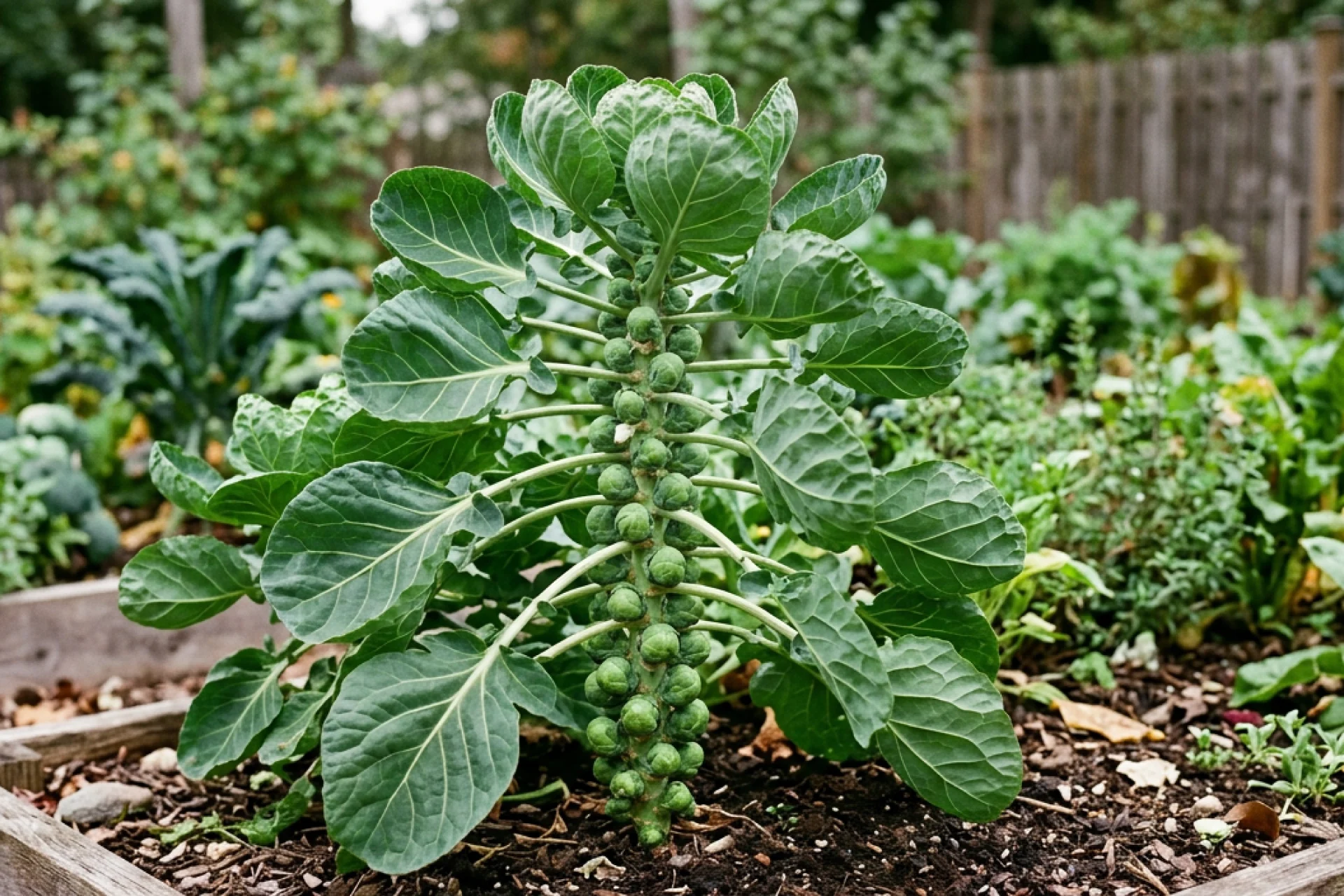
Brussels sprouts can be a little stubborn, but fall is where they shine. If you want to grow Brussels sprouts that are firm, sweet, and worth the garden space, timing matters more than almost anything else.
This is a cool-season crop. Give it hot weather at the wrong stage, and you get loose little buttons instead of tight sprouts. Give it a long season that ends in cool air, and the whole plant works with you, not against you.
Let’s start with the piece that makes or breaks a fall crop.
Count backward from your first frost date
Brussels sprouts need a long growing season, and they taste best when the crop finishes in cool weather. That’s why you don’t plant them for summer eating. You plant them so the sprouts bulk up as days get shorter and nights cool down.
Want the simple version? Find your average first fall frost date, then count backward.
Most varieties need about 85 to 110 days from transplant to harvest. If you’re starting from seed, give yourself another 4 to 6 weeks to raise transplants. For many gardeners, that means starting seeds in early to mid-summer and setting plants out in midsummer.
Here’s an easy way to do it:
- Look up your average first fall frost date.
- Check the seed packet for days to maturity.
- Count backward that many days from the first frost date.
- Add a little cushion for slow growth, heat stress, or transplant recovery.
If you don’t know your frost date, your local extension office or weather records are a good place to check. For a full fall planting timeline across multiple crops, see our guide to starting seeds for a fall garden.
If Brussels sprouts mature in heat, they often stay loose and leafy.
A quick regional guide
These windows are a starting point, not a hard rule. Your frost date always wins.
| Garden region | Average first frost | Start seeds | Transplant outside |
|---|---|---|---|
| Cold North, short seasons | September to early October | Late May to June | July |
| Northeast and upper Midwest | October | June | Mid-July to early August |
| Mid-Atlantic and Pacific Northwest | Late October to November | June to July | August |
| South | November to December | August | September to October |
| Mild winter areas | Very late frost or little frost | Late August to September | October to November |
The big takeaway is simple. Don’t plant by the calendar alone. Plant by your fall frost date, then work backward so the harvest lands in cool weather.
Start strong plants and give them room
You can direct sow Brussels sprouts in some gardens, but starting seeds in trays is easier for most people. It gives you a better shot at strong, even plants, and that’s helpful when you’re racing summer heat.
Sow seeds about 1/4 inch deep in a seed-starting mix. Keep them moist, give them bright light, and don’t let them get leggy. When the seedlings have a few true leaves, thin them or pot them up so each one has space.
Once your transplants are sturdy, harden them off for about a week before planting outside. That means a little outdoor time each day, with more sun and wind as the days go on. It helps prevent transplant shock.
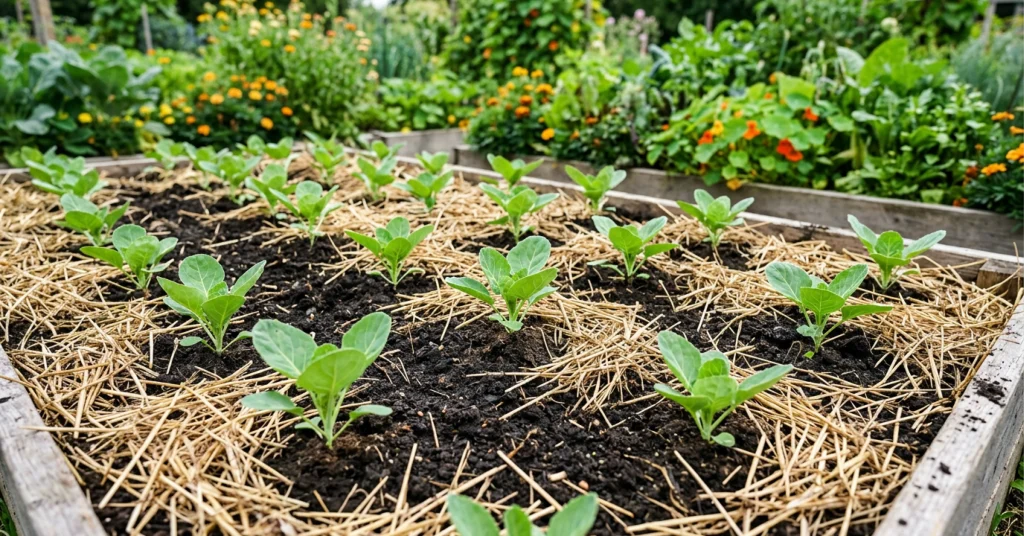
Pick a spot with full sun and rich soil. Mix in compost before planting, and make sure the bed drains well. Brussels sprouts like steady moisture, but they don’t want soggy feet.
Space matters here. These aren’t tiny plants. Give them about 18 to 24 inches between plants, with 24 to 36 inches between rows. Good spacing improves airflow, makes pest checks easier, and helps sprouts form better along the stalk.
After planting, water deeply and add mulch. A layer of straw or shredded leaves helps hold moisture and keeps roots cooler during late summer. That’s a small step, but it helps a lot when the weather is still hot.
Growing Brussels sprouts in containers
Yes, you can grow Brussels sprouts in pots. No, they are not the easiest container vegetable. They get tall, heavy, and hungry.
Still, if container growing is what you have, go for it.
Use one plant per container, and don’t go too small. A pot that holds at least 5 gallons is the bare minimum, and 7 to 10 gallons is better. Choose something wide and heavy to grow Brussels sprouts, so it doesn’t tip once the plant gets tall. A container that’s at least 12 inches deep works well.
Fill it with a quality potting mix, not garden soil. Add compost if you have it, and use a slow-release fertilizer at planting time. Keep the pot where it gets full sun.
Container-grown Brussels sprouts dry out faster than garden plants, especially while summer is still hanging on. Check the soil often. If the top inch is dry, water deeply. Don’t let the mix swing from bone dry to soaked every few days. That kind of stress can slow growth and affect sprout quality.
You may also need a stake or cage by late season. A mature plant can get top-heavy, and on a windy afternoon, it can lay it over. If you’re new to pots, this guide on how to start a container garden is a helpful place to begin.
How to get firmer, sweeter sprouts
This is the part most gardeners care about. You grew the plant. Now you want the sprouts to be tight, solid, and good enough to roast.
First, keep growth steady. Brussels sprouts like regular water, full sun, and enough nutrients to keep building leaves and stalk early on. If growth stalls, sprout size often suffers. A side-dressing of fertilizer during early growth can help, but don’t push heavy nitrogen late in the season. Too much late feeding can lead to leafy, loose sprouts instead of firm ones.
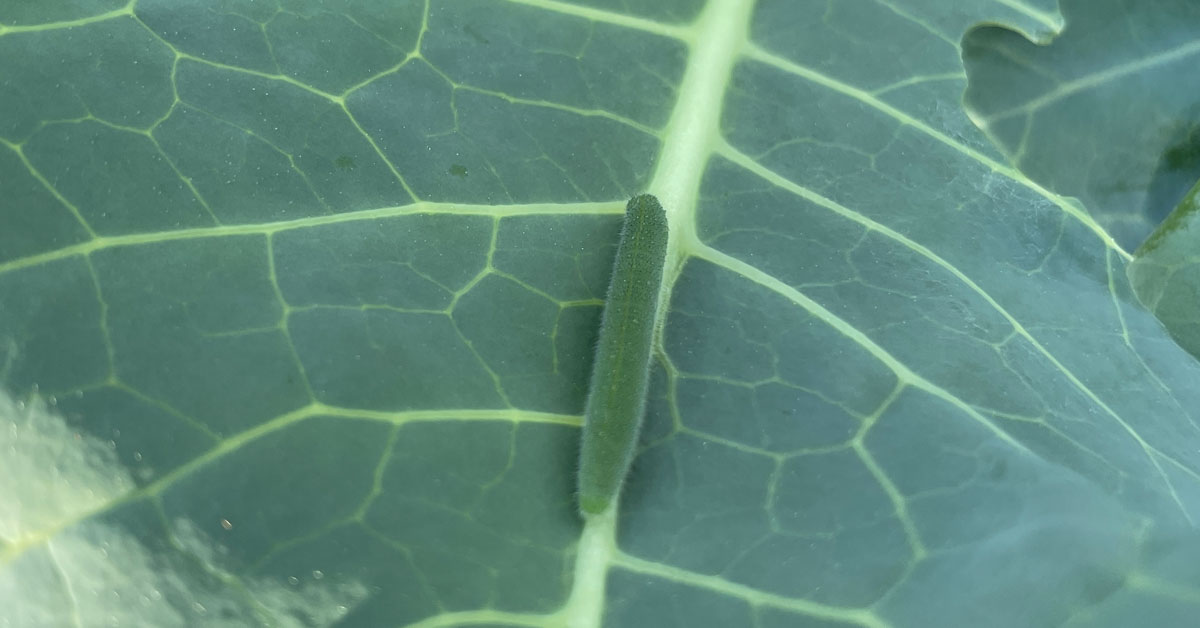
Next, keep the leaves healthy. Those big leaves are the plant’s food factory. If cabbage worms, aphids, or other pests chew them up, the sprouts won’t grow well. Check the undersides of leaves often. Hand-pick worms when you see them, and use row cover early in the season if pests are a yearly problem.
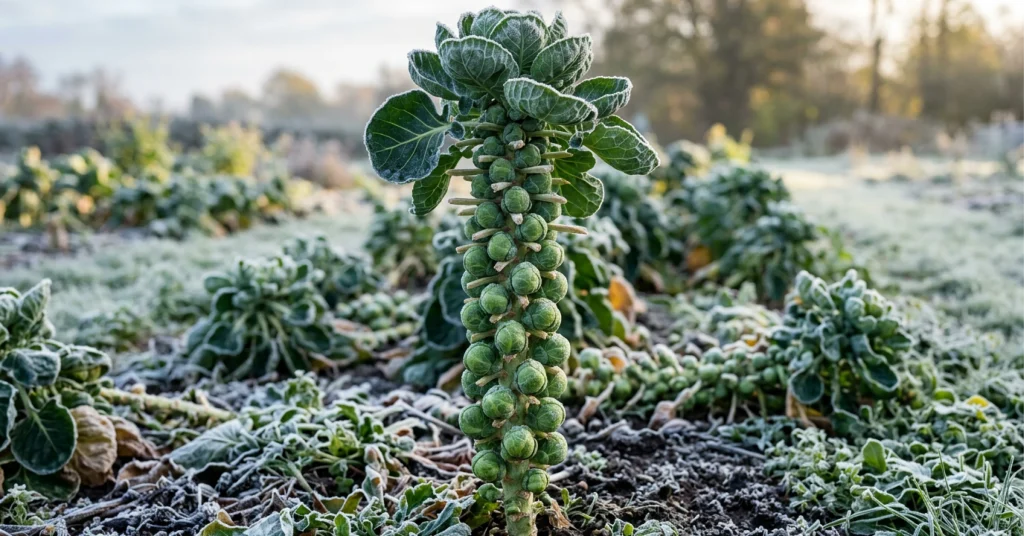
Cool weather improves flavor. A light frost can make sprouts taste sweeter, which is one reason fall-grown plants beat spring crops for many gardeners.
For better firmness, many gardeners remove the top of the plant a few weeks before the main harvest. According to Almanac’s Brussels sprouts growing guide, topping plants about 3 to 4 weeks before harvest can help the sprouts size up more evenly. Do this only after plenty of sprouts have formed along the stem.
A few more things help:
- Keep soil evenly moist, not dry one week and drenched the next.
- Remove yellowing lower leaves as the plant matures.
- Don’t crowd plants or grow them in too much shade.
- Wait for cool weather before judging flavor.
Harvest starts at the bottom of the stalk, where sprouts mature first. Pick them when they are about 1 to 2 inches across and feel firm when squeezed. If they feel puffy or leafy, they need more time, or the weather has stayed too warm.
You can twist the sprouts off by hand or cut them with a knife. Keep harvesting upward as they mature. In many gardens, the plant keeps going through several light frosts.
If a hard freeze is coming and you still have lots of sprouts left, harvest the whole stalk. That’s often the easiest way to bring the crop in at once.
Grow Brussels Sprouts
Brussels sprouts ask for patience, but the plan is simple once you see it. Start with your first fall frost date, count backward, and let the crop finish in cool weather.
That timing is what turns a lanky cabbage cousin into a stalk full of firm, sweet sprouts. Get the season lined up right, and the rest gets much easier.